New ArrivalsGift Ideas for MomClothing, Shoes & AccessoriesHomeKitchen & DiningOutdoor Living & GardenFurnitureGroceryHousehold EssentialsBabyBeautyPersonal CareHealthWellnessBackpacks & LuggageSports & OutdoorsToysElectronicsVideo GamesMovies, Music & BooksSchool & Office SuppliesParty SuppliesGift IdeasGift CardsPetsUlta Beauty at TargetShop by CommunityTarget OpticalDealsClearanceTarget New ArrivalsHome Decor Ideas & TrendsTop DealsTarget Circle DealsWeekly AdShop Order PickupShop Same Day DeliveryRegistryRedCardTarget CircleFind Stores
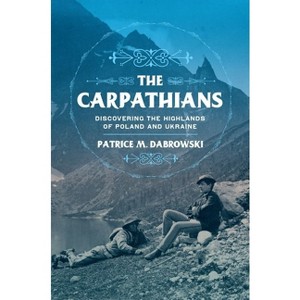
Carpathians - (Niu Slavic, East European, and Eurasian Studies) by  Patrice M Dabrowski (Hardcover) - 1 of 1

Carpathians - (Niu Slavic, East European, and Eurasian Studies) by Patrice M Dabrowski (Hardcover)

$20.51Save $14.44 (41% off)

In Stock

Eligible for registries and wish lists

About this item

Highlights

  • In The Carpathians, Patrice M. Dabrowski narrates how three highland ranges of the mountain system found in present-day Poland, Slovakia, and Ukraine were discovered for a broader regional public.
  • Author(s): Patrice M Dabrowski
  • 288 Pages
  • History, Russia & the Former Soviet Union
  • Series Name: Niu Slavic, East European, and Eurasian Studies

Description


About the Book


"A study of how three discrete mountain ranges within the Carpathian Mountain system -- the Tatras, Eastern Carpathians, and Bieszczady Mountains, together with their indigenous highlanders (Gâorale, Hutsuls, Boikos, and Lemkos)--were discovered and turned into popular tourist destinations by Poles and Ukrainians in the nineteenth and twentieth centuries" --


Book Synopsis


In The Carpathians, Patrice M. Dabrowski narrates how three highland ranges of the mountain system found in present-day Poland, Slovakia, and Ukraine were discovered for a broader regional public. This is a story of how the Tatras, Eastern Carpathians, and Bieszczady Mountains went from being terra incognita to becoming the popular tourist destinations they are today. It is a story of the encounter of Polish and Ukrainian lowlanders with the wild, sublime highlands and with the indigenous highlanders--Górale, Hutsuls, Boikos, and Lemkos--and how these peoples were incorporated into a national narrative as the territories were transformed into a native/national landscape.

The set of microhistories in this book occur from about 1860 to 1980, a time in which nations and states concerned themselves with the "frontier at the edge." Discoverers not only became enthralled with what were perceived as their own highlands but also availed themselves of the mountains as places to work out answers to the burning questions of the day. Each discovery led to a surge in mountain tourism and interest in the mountains and their indigenous highlanders.

Although these mountains, essentially a continuation of the Alps, are Central and Eastern Europe's most prominent physical feature, politically they are peripheral. The Carpathians is the first book to deal with the northern slopes in such a way, showing how these discoveries had a direct impact on the various nation-building, state-building, and modernization projects. Dabrowski's history incorporates a unique blend of environmental history, borderlands studies, and the history of tourism and leisure.


Review Quotes


Patrice M. Dabrowski has written an excellent book on a topic that has been long neglected. With the publication of The Carpathians, this major mountain range is finally beginning to catch up with the Alps and the Pyrenees as another kind of borderland that offers scholars a unique perspective on the development of modern national identities and everyday life.

-- "Slavic Review"

Dabrowski is admirably open-minded and even-handed in explaining the perspectives of different actors and the visions of the highlands that they articulated. While engaging in ongoing, nuanced exploration of the relationship between the local and the national, she is attentive to those, such as the Jewish residents of the region, who could never quite speak on behalf of either local society or the nation but nonetheless played significant roles in the mutual constitution of both

-- "H-net Poland"

The Carpathians is, in many ways, a pioneering effort, one that will hopefully put the Carpathians back on historians' mental maps and pave the way for further studies.

-- "History: Reviews of New Books"
Dimensions (Overall): 9.3 Inches (H) x 7.7 Inches (W) x .9 Inches (D)
Weight: 1.1 Pounds
Suggested Age: 22 Years and Up
Number of Pages: 288
Genre: History
Sub-Genre: Russia & the Former Soviet Union
Series Title: Niu Slavic, East European, and Eurasian Studies
Publisher: Northern Illinois University Press
Format: Hardcover
Author: Patrice M Dabrowski
Language: English
Street Date: October 15, 2021
TCIN: 89011886
UPC: 9781501759673
Item Number (DPCI): 247-04-3616
Origin: Made in the USA or Imported
If the item details aren’t accurate or complete, we want to know about it.

Shipping details

Estimated ship dimensions: 0.9 inches length x 7.7 inches width x 9.3 inches height
Estimated ship weight: 1.1 pounds
We regret that this item cannot be shipped to PO Boxes.
This item cannot be shipped to the following locations: American Samoa (see also separate entry under AS), Guam (see also separate entry under GU), Northern Mariana Islands, Puerto Rico (see also separate entry under PR), United States Minor Outlying Islands, Virgin Islands, U.S., APO/FPO, Alaska, Hawaii

Return details

This item can be returned to any Target store or Target.com.
This item must be returned within 90 days of the date it was purchased in store, delivered to the guest, delivered by a Shipt shopper, or picked up by the guest.
See the return policy for complete information.

Q: What unique perspectives does the book offer?

submitted by AI Shopping Assistant - 17 days ago
  • A: It incorporates environmental history, borderlands studies, and examines the history of tourism in the Carpathians.

    submitted byAI Shopping Assistant - 17 days ago
    Ai generated

Q: Who is the author of this book?

submitted by AI Shopping Assistant - 17 days ago
  • A: The book is authored by Patrice M. Dabrowski, who has written extensively on the region.

    submitted byAI Shopping Assistant - 17 days ago
    Ai generated

Q: What indigenous groups are discussed in the book?

submitted by AI Shopping Assistant - 17 days ago
  • A: The book highlights the Gorale, Hutsuls, Boikos, and Lemkos, focusing on their role in the region's narrative.

    submitted byAI Shopping Assistant - 17 days ago
    Ai generated

Q: What historical period does the book cover?

submitted by AI Shopping Assistant - 17 days ago
  • A: The narrative spans from about 1860 to 1980, detailing the region's transformation during this time.

    submitted byAI Shopping Assistant - 17 days ago
    Ai generated

Q: What is the main focus of the book?

submitted by AI Shopping Assistant - 17 days ago
  • A: The book explores how three mountain ranges in the Carpathians became popular tourist destinations and their impact on national identity.

    submitted byAI Shopping Assistant - 17 days ago
    Ai generated

Additional product information and recommendations

Get top deals, latest trends, and more.

Privacy policy

Footer

About Us

About TargetCareersNews & BlogTarget BrandsBullseye ShopSustainability & GovernancePress CenterAdvertise with UsInvestorsAffiliates & PartnersSuppliersTargetPlus

Help

Target HelpReturnsTrack OrdersRecallsContact UsFeedbackAccessibilitySecurity & FraudTeam Member ServicesLegal & Privacy

Stores

Find a StoreClinicPharmacyTarget OpticalMore In-Store Services

Services

Target Circle™Target Circle™ CardTarget Circle 360™Target AppRegistrySame Day DeliveryOrder PickupDrive UpFree 2-Day ShippingShipping & DeliveryMore Services
PinterestFacebookInstagramXYoutubeTiktokTermsCA Supply ChainPrivacy PolicyCA Privacy RightsYour Privacy ChoicesInterest Based AdsHealth Privacy Policy