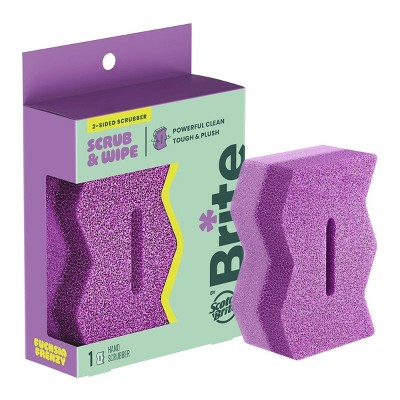
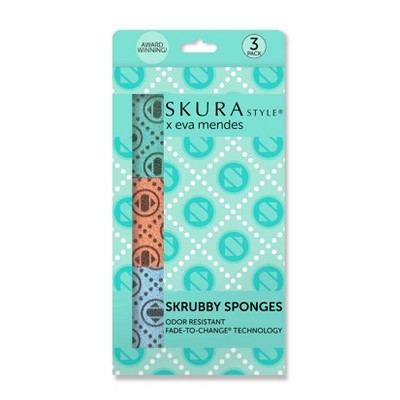
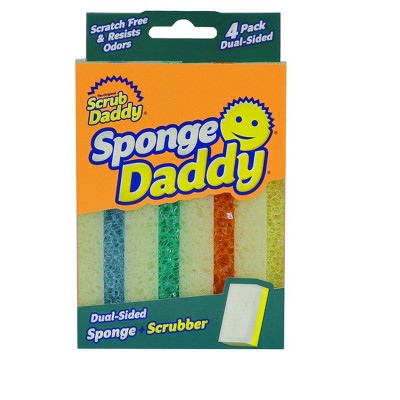
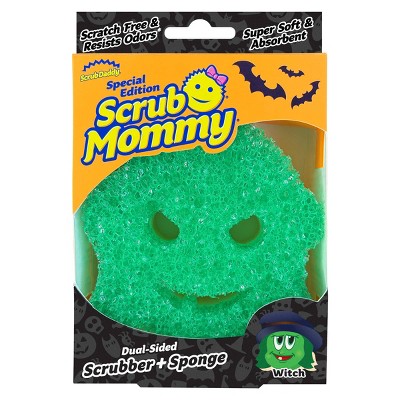
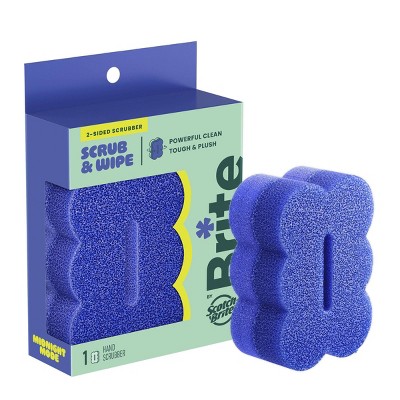
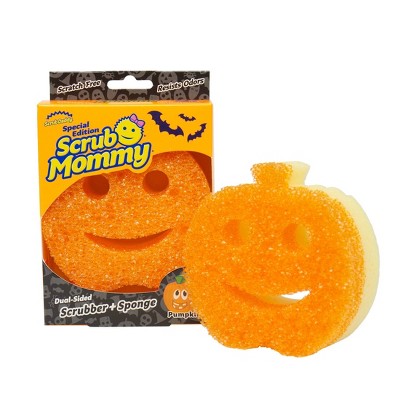
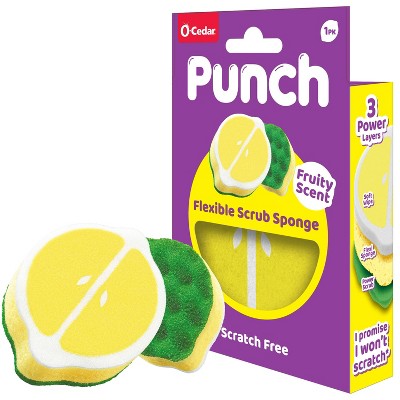
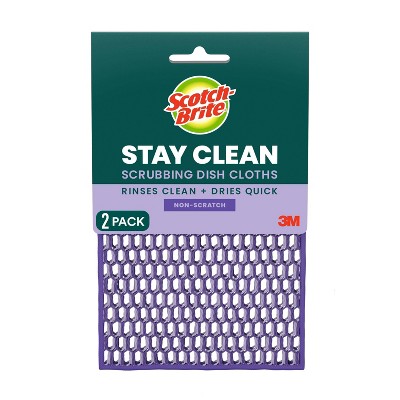
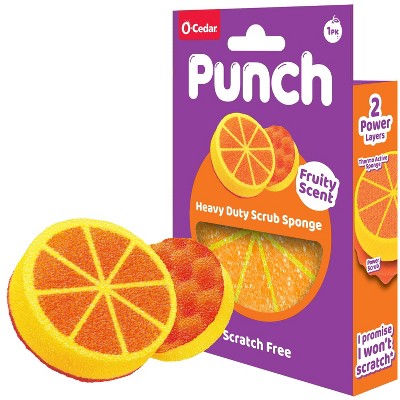
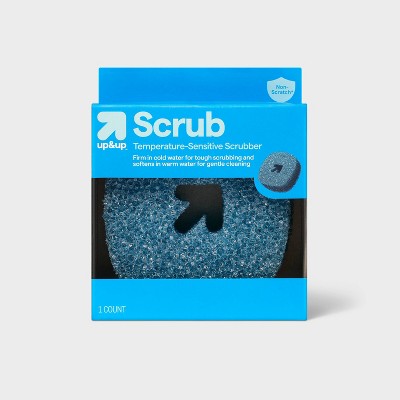
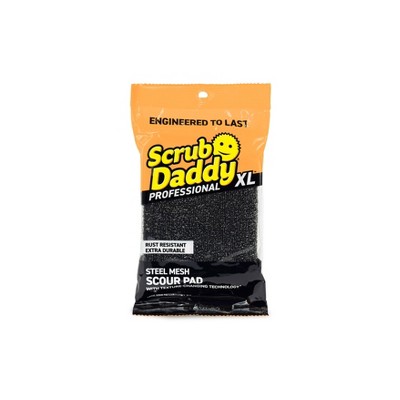
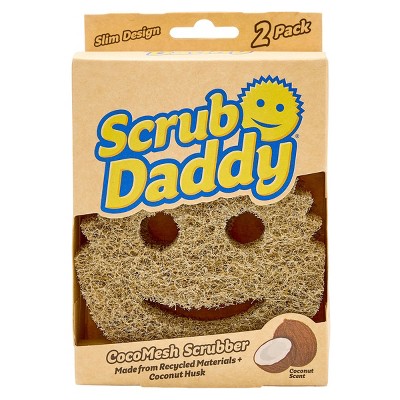
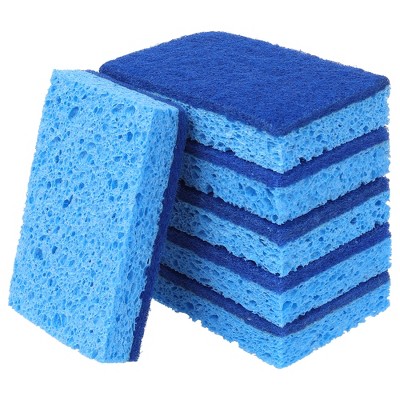
Common materials listed include cellulose, foam, plastic, and polyester. These materials are often combined or formed into firmer constructions for tougher scrubbing tasks.
Recommended surfaces include nonstick cookware, glassware, countertops, tubs and showers, and other general household surfaces. Surfaces to avoid (as noted in some listings) include copper, polished finishes, unfinished wood, and some stainless‑steel appliance finishes.
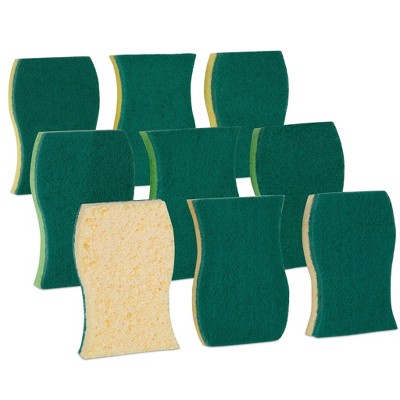
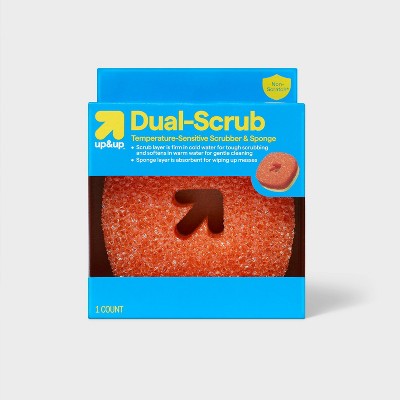
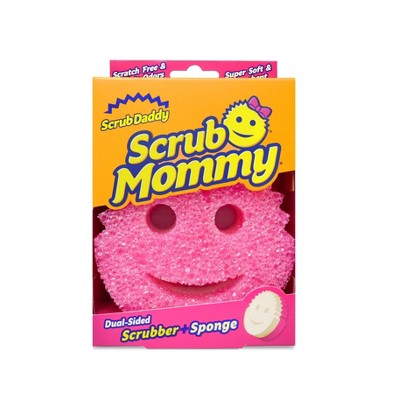
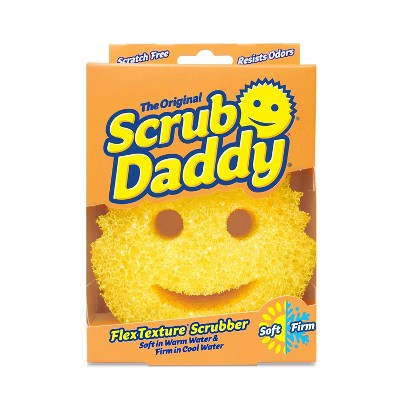
Some sponges change firmness with water temperature (firmer in cold water, softer in warm water), while others use a dual‑sided or two‑material construction: a firm, abrasive side for tough messes and a softer, absorbent side for gentle cleaning.
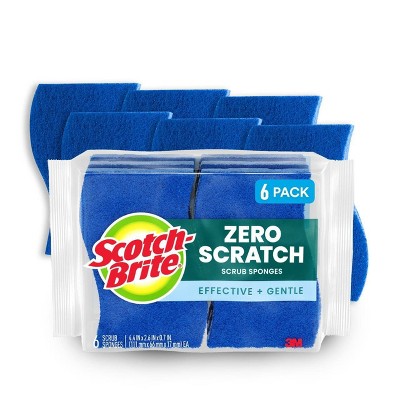
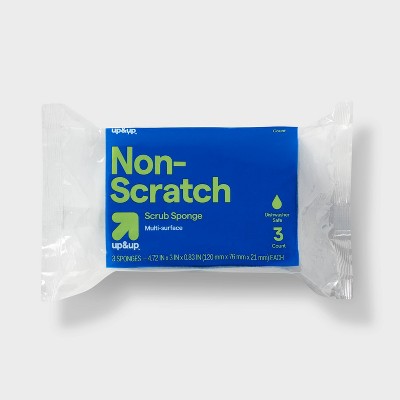
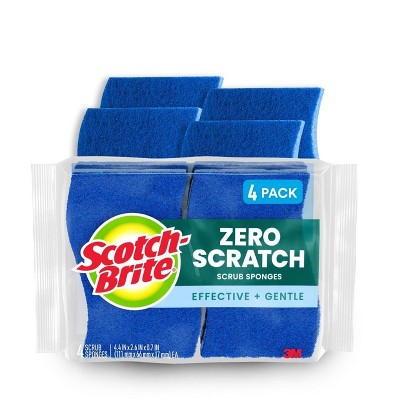
Abrasiveness ranges from non‑abrasive, zero‑scratch options up to heavy‑duty or extra‑durable scrubbers. Some products also advertise enhanced scrubbing power (for example, branded claims such as “3X scrubbing power”).
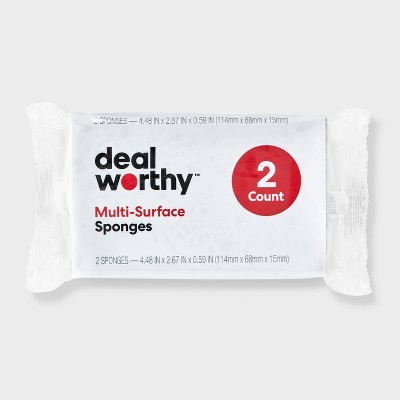
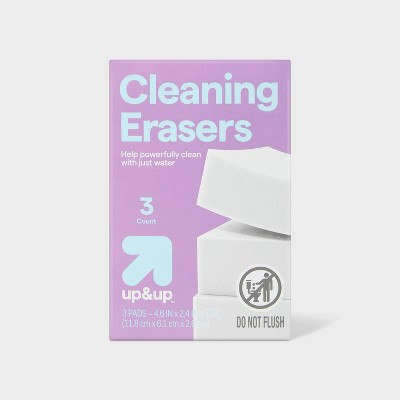
Products are sold as single pieces and in multi‑packs; common multi‑pack sizes shown include 3‑, 4‑, 9‑, and 12‑count packages.
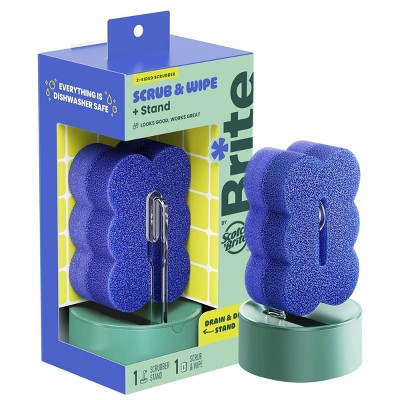
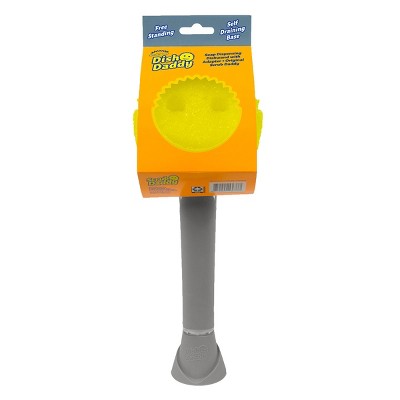
Design features include contoured or S‑shaped bodies for better reach and grip, molded finger or eye holes and utility openings for cleaning utensils, dual‑sided constructions, soap‑dispensing handles or standing bases for cleaner storage and faster drying, and built‑in scrapers on some wand designs.