Target New ArrivalsGift Ideas for DadClothing, Shoes & AccessoriesHome & DecorKitchen & DiningOutdoor Living & GardenGroceryHousehold EssentialsBabyBeautyPersonal CareSports & OutdoorsHealthWellnessLuggageSchool & Office SuppliesToysElectronicsVideo GamesMovies, Music & BooksParty SuppliesGift IdeasGift CardsPetsUlta Beauty at TargetShop by CommunityTarget OpticalDealsClearanceNew ArrivalsGift Ideas for DadBack to SchoolCollegeTop DealsTarget Circle DealsWeekly AdShop Order PickupShop Same Day DeliveryRegistryRedCardTarget CircleFind Stores
Wilderness Into Civilized Shapes - by  Laura Wright (Paperback) - 1 of 1

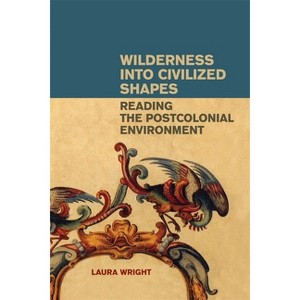
Wilderness Into Civilized Shapes - by Laura Wright (Paperback)

$26.95

In Stock

Free & easy returns

Free & easy returns

Return this item by mail or in store within 90 days for a full refund.
Eligible for registries and wish lists

About this item

Highlights

  • This study examines how postcolonial landscapes and environmental issues are represented in fiction.
  • About the Author: LAURA WRIGHT is the founder of the field of vegan studies.
  • 178 Pages
  • Literary Criticism, European

Description


About the Book


Wright rearticulates questions about the role of the writer of fiction as environmental activist and spokesperson, the connections between animal ethics and environmental responsibility, and the potential perpetuation of a neocolonial framework founded on western commodification and resource-based imperialism.


Book Synopsis


This study examines how postcolonial landscapes and environmental issues are represented in fiction. Wright creates a provocative discourse in which the fields of postcolonial theory and ecocriticism are brought together.

Laura Wright explores the changes brought by colonialism and globalization as depicted in an array of international works of fiction in four thematically arranged chapters. She looks first at two traditional oral histories retold in modern novels, Zakes Mda's The Heart of Redness (South Africa) and Ngugi wa Thiong'o's Petals of Blood (Kenya), that deal with the potentially devastating effects of development, particularly through deforestation and the replacement of native flora with European varieties. Wright then uses J. M. Coetzee's Disgrace (South Africa), Yann Martel's Life of Pi (India and Canada), and Joy Williams's The Quick and the Dead (United States) to explore the use of animals as metaphors for subjugated groups of individuals. The third chapter deals with India's water crisis via Arundhati Roy's activism and her novel, The God of Small Things. Finally, Wright looks at three novels--Flora Nwapa's Efuru (Nigeria), Keri Hulme's The Bone People (New Zealand), and Sindiwe Magona's Mother to Mother (South Africa)--that depict women's relationships to the land from which they have been dispossessed.

Throughout Wilderness into Civilized Shapes, Wright rearticulates questions about the role of the writer of fiction as environmental activist and spokesperson, the connections between animal ethics and environmental responsibility, and the potential perpetuation of a neocolonial framework founded on western commodification and resource-based imperialism.


Review Quotes


Wilderness into Civilized Shapes offers elegant readings of a diverse range of texts as the bedrock from which it is able to articulate significant complications and paradigm shifts to the field of ecocritical inquiry. Wright's conclusion. . .establishes just what is at stake politically and culturally in postcolonial ecocritical efforts. This is a fitting open-end to an excellent, expansive example of what can be accomplished in the field.

--Chris Campbell, "Safundi"

[Laura Wright] invites complex understandings of the relationship between textual representation of voice and subaltern subjectivity. . . .[Her] refusal to accept singular perspectives, both theoretical and analytic, reveals a desire to venerate the interconnectedness of peoples, species, and ecosystems.

--Madison P. Jones "ISLE"

[T]his book represents a valuable contribution to the emerging field of postcolonial environmental criticism.

--Sharae Deckard "Green Letters"

Laura Wright effectively brings together postcolonial and ecocritical readings strategies, even as she explores a wide range of postcolonial texts dealing with environmental issues. Her insightful close readings, elegant prose, and effective organization all contribute to making this a groundbreaking study in the emerging field of green postcolonialism.

--Byron Caminero-Santangelo "author of Joseph Conrad: Reading Postcolonial Intertextuality"

Laura Wright offers us wonderful new ways of synthesizing the burgeoning but hitherto distinct fields of postcolonial studies, ecocriticism, and animal studies. Wright deftly negotiates this new turf, analyzing the main conceptual innovations and demonstrating, through smart readings, just what a new environmental-postcolonial-animal studies approach to literature can deliver.

--Rob Nixon "Rachel Carson Professor of English, University of Wisconsin"

Wright's deeply provocative and richly nuanced Wilderness into Civilized Shapes represents the current state of play in contemporary postcolonial ecocriticism. . . . Wright provides much needed tools to explore the diversity and urgency of these cultural arrangements with the natural world. This is the sort of book that, for postcolonial scholars, represents the best in the field, while, for those in adjoining disciplines, offering a rewarding invitation to explore an allied field.

--Deane Curtin "author of Environmental Ethics for a Postcolonial World"


About the Author


LAURA WRIGHT is the founder of the field of vegan studies. She is professor of English at Western Carolina University and the author of The Vegan Studies Project: Food, Animals, and Gender in the Age of Terror (Georgia). Most recently, she edited The Routledge Handbook of Vegan Studies. She lives in Cullowhee, North Carolina.
Dimensions (Overall): 9.0 Inches (H) x 6.0 Inches (W) x .51 Inches (D)
Weight: .74 Pounds
Suggested Age: 22 Years and Up
Number of Pages: 178
Genre: Literary Criticism
Sub-Genre: European
Publisher: University of Georgia Press
Theme: English, Irish, Scottish, Welsh
Format: Paperback
Author: Laura Wright
Language: English
Street Date: April 15, 2010
TCIN: 1011114498
UPC: 9780820335681
Item Number (DPCI): 247-16-6907
Origin: Made in the USA or Imported
If the item details aren’t accurate or complete, we want to know about it.

Shipping details

Estimated ship dimensions: 0.51 inches length x 6 inches width x 9 inches height
Estimated ship weight: 0.74 pounds
We regret that this item cannot be shipped to PO Boxes.
This item cannot be shipped to the following locations: American Samoa (see also separate entry under AS), Guam (see also separate entry under GU), Northern Mariana Islands, Puerto Rico (see also separate entry under PR), United States Minor Outlying Islands, Virgin Islands, U.S., APO/FPO, Alaska, Hawaii

Return details

This item can be returned to any Target store or Target.com.
This item must be returned within 90 days of the date it was purchased in store, delivered to the guest, delivered by a Shipt shopper, or picked up by the guest.
See the return policy for complete information.

Q: Which novels are analyzed regarding environmental issues?

submitted by AI Shopping Assistant - 26 days ago
  • A: Wright analyzes novels like J. M. Coetzee's Disgrace and Arundhati Roy's The God of Small Things.

    submitted byAI Shopping Assistant - 26 days ago
    Ai generated

Q: What is the significance of animal metaphors in the book?

submitted by AI Shopping Assistant - 26 days ago
  • A: Animal metaphors in the book represent subjugated groups and highlight connections between ethics and environmental responsibility.

    submitted byAI Shopping Assistant - 26 days ago
    Ai generated

Q: How many chapters does the book contain?

submitted by AI Shopping Assistant - 26 days ago
  • A: The book is organized into four thematically arranged chapters, each focusing on different aspects.

    submitted byAI Shopping Assistant - 26 days ago
    Ai generated

Q: Who is the author and what is her background?

submitted by AI Shopping Assistant - 26 days ago
  • A: Laura Wright is a professor and founder of vegan studies, known for her work in literary criticism.

    submitted byAI Shopping Assistant - 26 days ago
    Ai generated

Q: What themes are explored in the book?

submitted by AI Shopping Assistant - 26 days ago
  • A: The book explores themes of postcolonial landscapes, environmental issues, animal ethics, and neocolonial frameworks.

    submitted byAI Shopping Assistant - 26 days ago
    Ai generated

Additional product information and recommendations

Discover more options

Get top deals, latest trends, and more.

Privacy policy