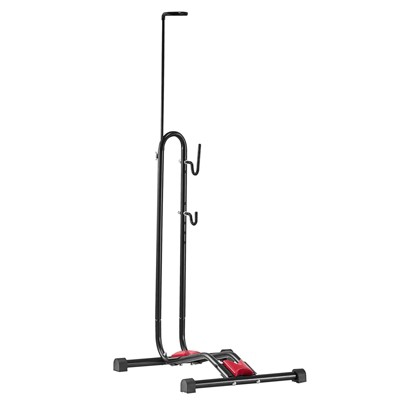
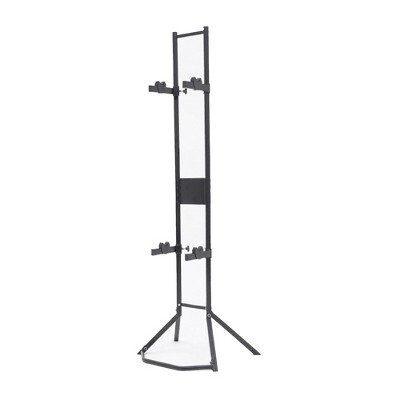
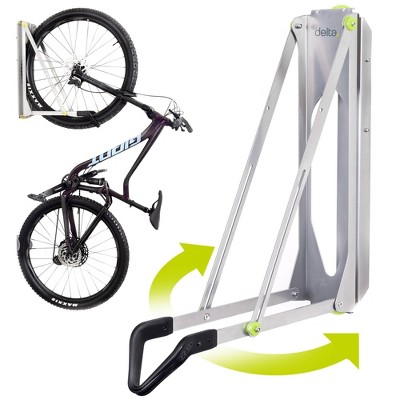
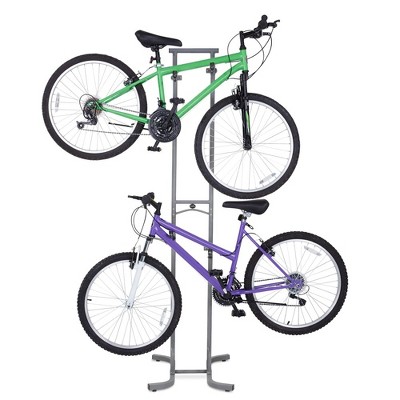
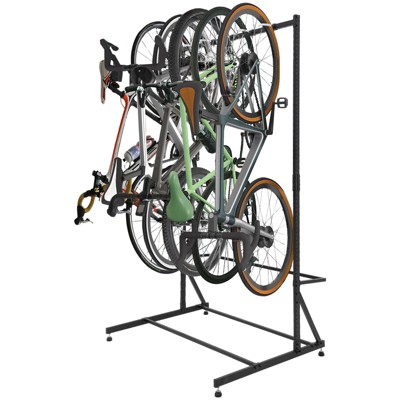
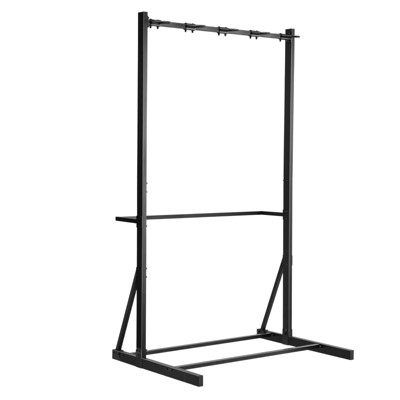
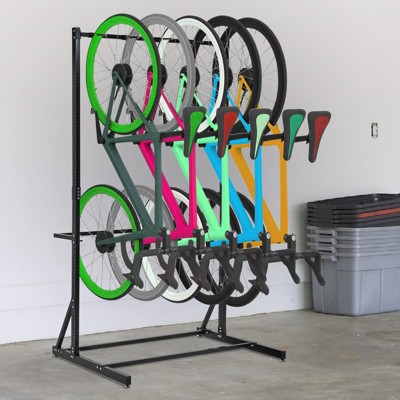
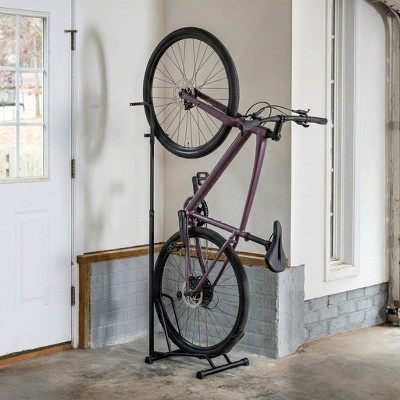
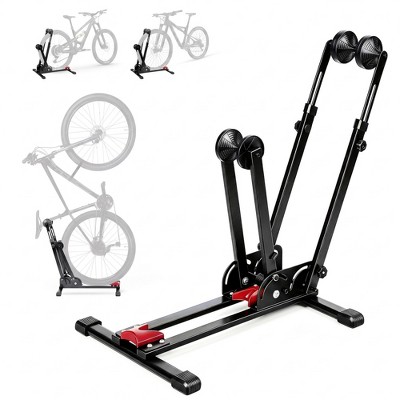
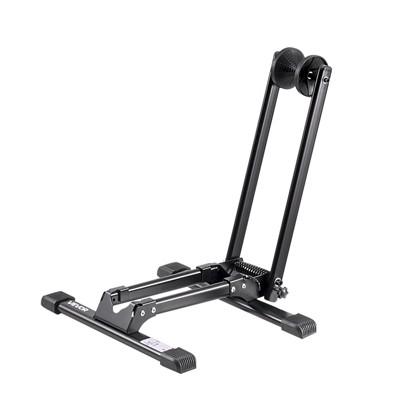
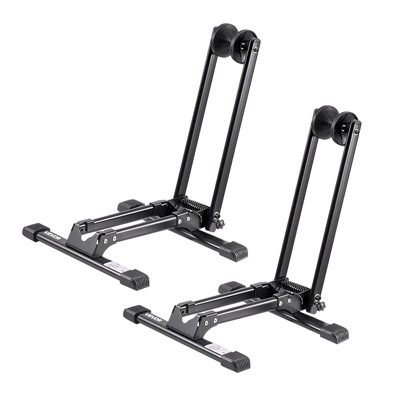
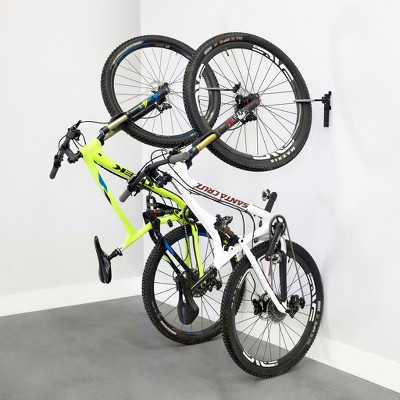
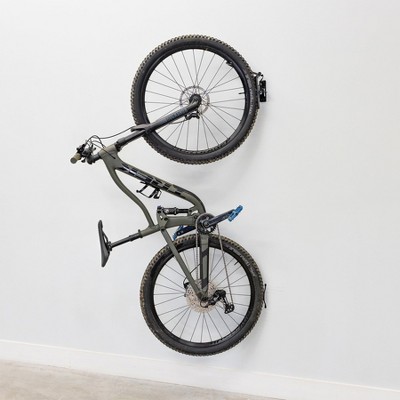
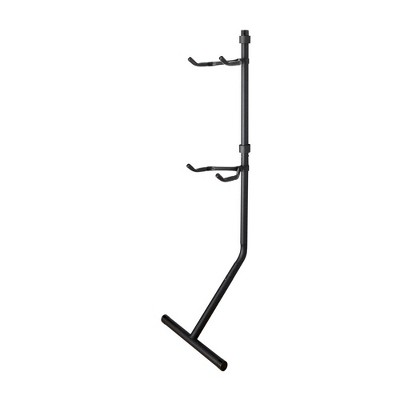
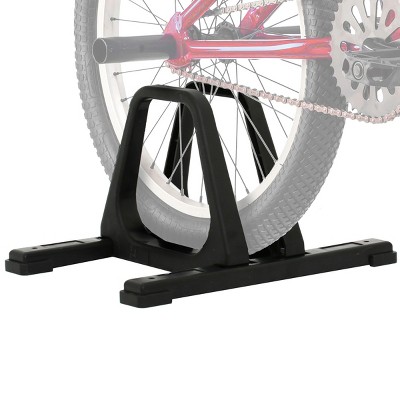
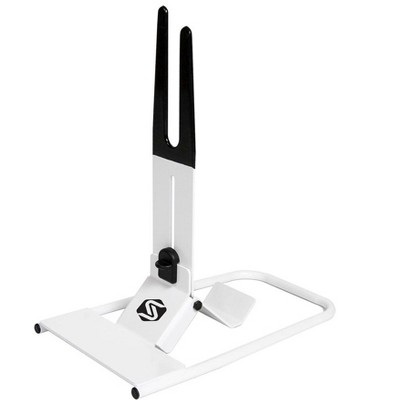
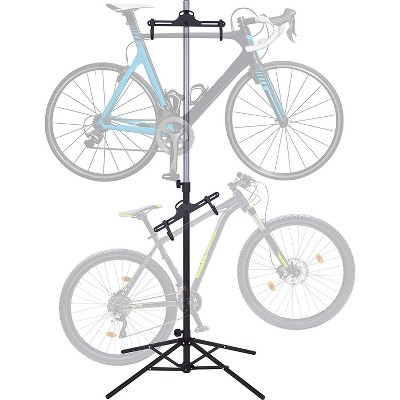
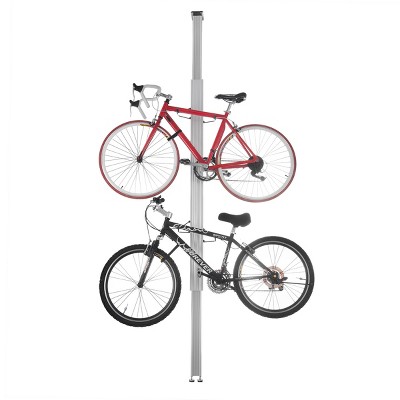
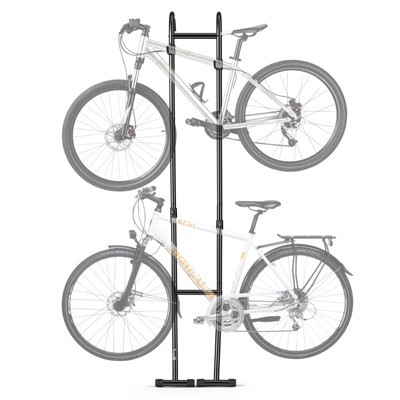
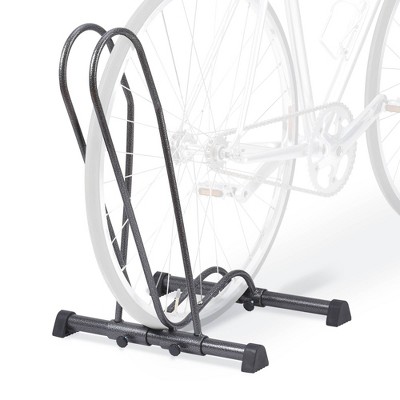
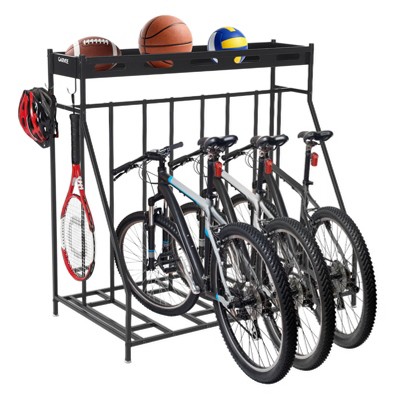
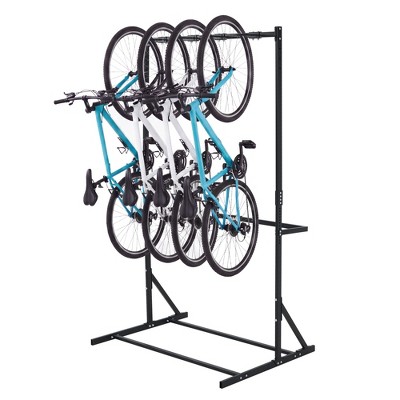
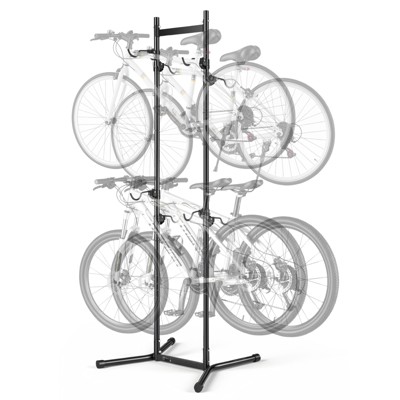
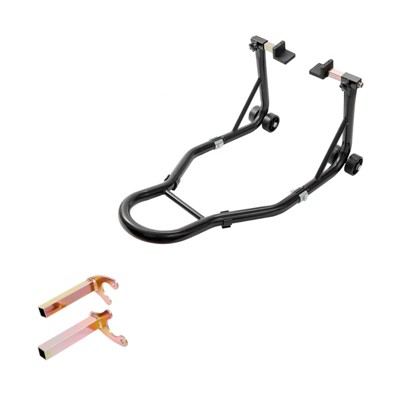
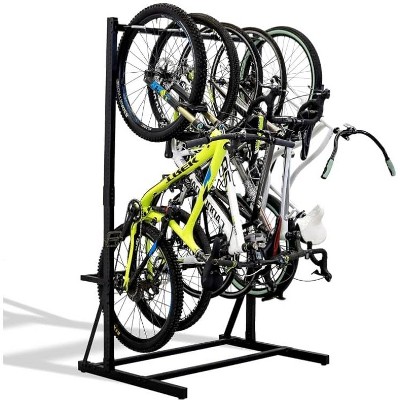
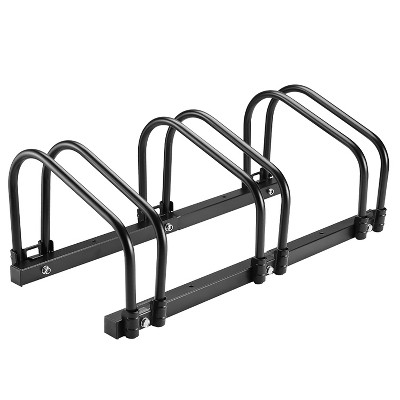
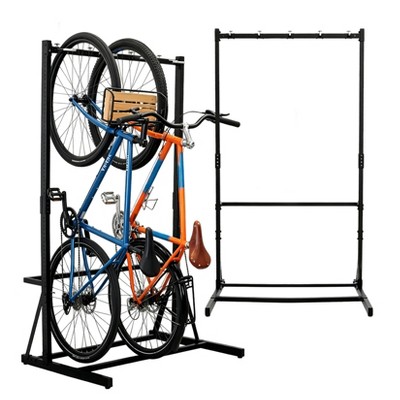
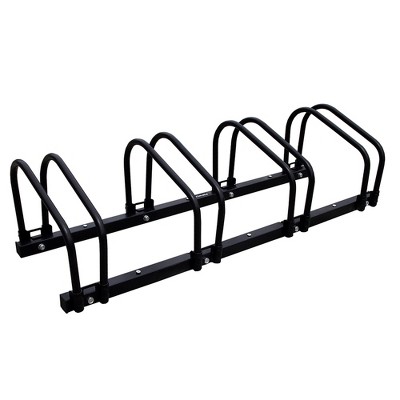
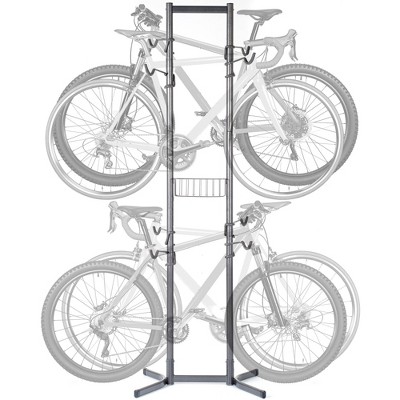
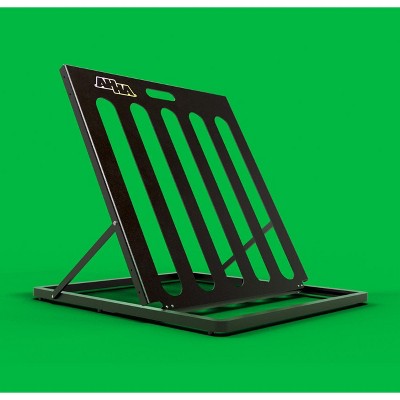
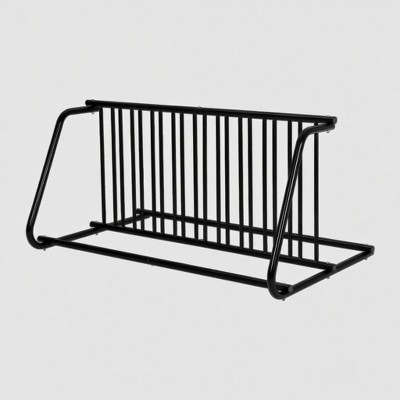
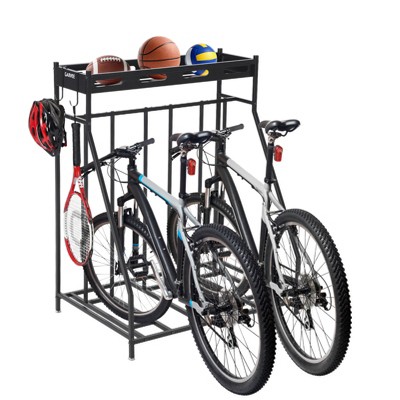
Vertical stands save floor space by storing bikes upright and enabling compact layouts: stacking or arranging multiple bikes, minimizing footprint, and leaving under‑bike clearance for storage. Listings often highlight compact footprints and space‑saving layouts that maximize available floor area.
Most freestanding stands list compatibility for common wheel diameters—commonly in the 22–28 inch range—and many specify tire widths up to about 2.2 inches. (Note: some trainer‑style stands list narrower or different ranges such as 26–28 inches.)
Capacity varies by product type: some vertical storage racks list support around 300–350 pounds, while many indoor trainers list capacities around 220 pounds. Exact load figures differ by model and intended use, so check the specific product listing.
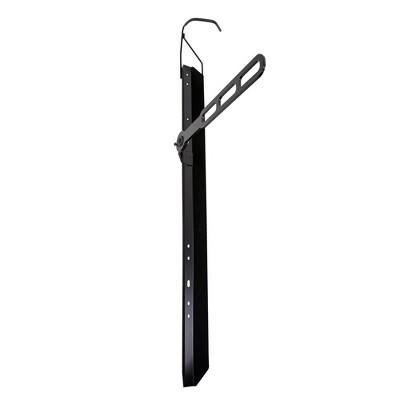
Adjustability varies by model: some stands offer adjustable height ranges (for example, about 46 to 81.5 inches) and adjustable hook spacing so they can accommodate different bike lengths and frame styles. Check the product specs for the exact adjustment range.
Most freestanding stands require adult assembly but are designed for straightforward setup—hardware and clear instructions are typically included for quick assembly.
Listings commonly name road, mountain, hybrid, children’s, and folding bikes as suitable for freestanding vertical racks and floor stands.
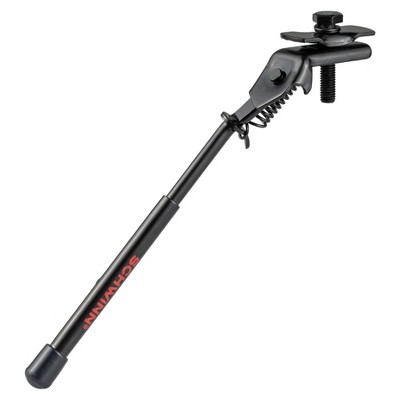
Trainer‑style stands emphasize exercise features—adjustable resistance, quick‑release or locking systems, folding portability, and noise reduction—whereas freestanding storage stands focus on upright storage capacity, wheel‑size compatibility, and space‑saving stability features.