Sponsored
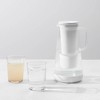

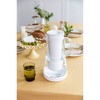
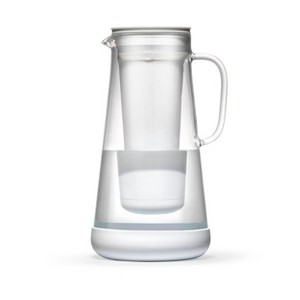
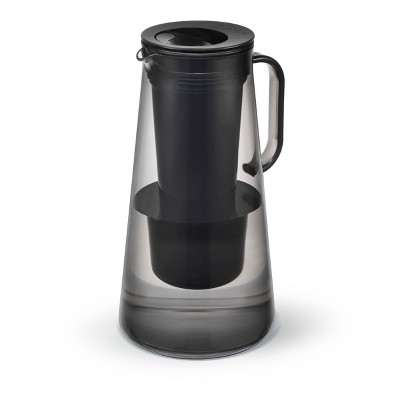
LifeStraw Home Water Filter Pitcher 7 Cup + Silicone Base Glass






In Stock
Sponsored
About this item
Highlights
- Filtration that actually does stuff. The only water filter pitcher that removes bacteria and parasites, in addition to microplastics.
- Reduces lead, mercury, and chemicals including PFAS (“forever chemicals”), chlorine, herbicides, pesticides, dirt, sand, and cloudiness. Retains essential minerals like magnesium and potassium that are good for your health.
- Sleek and sustainable design, made from hand blown borosilicate glass. Easy to use and maintain.
- Improves taste and avoids the need to buy single-use plastic bottled water
- The LifeStraw Home Water Filter Pitcher comes with your first membrane microfilter and carbon filter included when purchased.
- Your purchase has impact: one product, one child, one year of safe water.
Description
Shipping details
Return details
Q: Is the gasket that holds the filter, plastic? Or is it glass as well?
A: Hello, The pitchers and housing are made of durable plastic materials that should not break down with normal use or time, and should not contribute to microplastic particulate in your water. All materials are also BPA-free and approved and verified for water contact.
submitted byLifeStraw - 9 days agoBrand expert
Q: Does this filter chlorine?
A: The LifeStraw Home Water Filter Pitcher utilizes a two-stage filter. The first is the LifeStraw Membrane Microfilter that removes 99.999999% of bacteria (E. coli, etc.), 99.999% of parasites (Giardia, Cryptosporidium, etc.), and 99.999% of microplastics. The second stage is the LifeStraw Activated Carbon + Ion Exchange Filter that reduces lead, mercury, chromium III, cadmium, copper and other heavy metals, chlorine and odors for improved taste.
submitted byLifeStraw - 13 days agoBrand expert
Q: Is the pitcher (without the filter) dishwasher safe?
A: Thank you for reaching out to us! We recommend avoiding the use of a dishwasher for your LifeStraw products, as exposure to alternating heat and cold can cause thermal stress, which may negatively affect the product over time.
submitted byLifeStraw - 2 months agoBrand expert
Q: Does this have a filter need charged notification
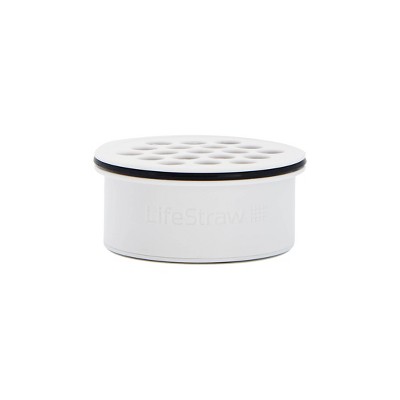
A: Thanks for reaching out! This pitcher doesn’t have an electronic “filter change” notification. Replace the Activated Carbon + Ion Exchange filter about every 2 months or 40 gallons, and replace the membrane microfilter about once a year (up to ~264 gallons).
submitted byLifeStraw - 2 months agoBrand expert
Q: Is there a California p65 warning on this glass pitcher
A: Thank you for your question. Proposition 65 warnings are on a range of products that you use every day from cars, washers, electronics, clothes, nutritional supplements, food, and beauty supplies. LifeStraw® products are among the safest, most portable, and innovative water filtration systems available today. Some of the materials in LifeStraw® products are groundbreaking, such as the LifeStraw® membrane microfilters that are capable of removing 99.999999% (log 8) of bacteria (including E. coli), 99.999% (log 5) of parasites (Giardia, Cryptosporidium, etc.), and 99.999% (log 5) of microplastics. We use materials common to water filtration and consumer products which may contain Acrylamide in trace amounts. That’s why Proposition 65 warnings are on some LifeStraw® products, and also common, or should be, on competitors’ products.
submitted byLifeStraw - 3 months agoBrand expert
Q: Is the silicone base removable?
A: Hi, Yes the silicone base is removable.
submitted byLifeStraw - 3 months agoBrand expert
Q: Is this certified to NSF/ANSI 53 or NSF/ANSI 58 for PFAS reduction?
A: Hello, Yes, the LifeStraw Home 7‑Cup (BPA‑free) Pitcher is certified to NSF/ANSI 53, which covers the removal of certain health-related contaminants (such as lead, mercury, chromium III, cadmium, and copper). It also meets the NSF P473 standard, specifically for reducing PFAS (including PFOA and PFOS), which are commonly known as “forever chemicals.” However, it is not certified to NSF/ANSI 58, which is reserved for reverse osmosis systems. You can find specific testing information about each of our products under the Technology lab and then go to each product/ lab information.
submitted byLifeStraw - 4 months agoBrand expert
Q: Do any of the parts including the filter have plastic?
A: Thank you for reaching out. This is a common and important question- especially with increasing concerns about plastics and water safety. Here’s some information to help clarify: Material Safety & Selection Our engineers and R&D teams carefully select materials that balance safety, durability, and longevity. All components that come in contact with water, including our pitcher, dispenser, and housing materials, are made from SMMA, which is BPA-free and chosen specifically because it does not leach harmful chemicals into the water. Over time, we’ve updated materials in response to emerging data and evolving safety standards. Rigorous Testing Standards LifeStraw products undergo testing in accredited laboratories and are further verified by independent, third-party labs. This gives us confidence that the materials used are safe and not leaching harmful substances. In addition, our products meet or exceed the standards set by the U.S. FDA, EU regulations, NSF, and California Prop 65 for materials used in drinking water applications. Plastics & Product Design Using plastic remains a complex challenge. While we are actively exploring sustainable alternatives, some materials—like those used in our membrane filters—currently don’t have viable replacements without compromising function, durability, or user experience. We know this is a concern for many customers, and we’re committed to continuing innovation in this area. Thank you again for your question.
submitted byLifeStraw - 4 months agoBrand expert
Q: How quickly does water filter for the max fill?
A: Hi, Thank you for your question. Here’s what to expect with the microfilter during first use: The flow may start out slow but should improve after the first few batches. Once broken in, the flow rate should be about 85–225 ml per minute (roughly 1/3 to 1 cup per minute). For example, the 7-Cup Pitcher typically takes 7 minutes to filter a batch, while the full 7 cups take about 20–25 minutes. The flow can slow if the water in the top and bottom sections is equal. To help, try refilling the top to maintain pressure. I hope this helps answer your question!
submitted byLifeStraw - 5 months agoBrand expert
Q: What is the maximum temperature the pitcher can handle? Can it safely accept boiling water or hot coffee in the pitcher without it shattering? Thanks.
A: The LifeStraw 7-Cup Glass Pitcher is made from durable borosilicate glass, which is more resistant to thermal shock than regular glass. However, LifeStraw advises against exposing the pitcher to extreme temperatures. Specifically, it should not be used with liquids hotter than 140°F (60°C) or colder than 33°F (1°C) . Pouring boiling water or hot coffee directly into the pitcher could damage the glass or compromise the filter components.
submitted byLifeStraw - 6 months agoBrand expert
Frequently bought together
Guests also viewed
Discover more options
Related Categories
Guests are saying

Thumbs up
Great Product
Amazing
I'm trying to return this
Perfection!
7 cup Glass
Finally! A glass pitcher!
6 cup glass pitcher
Great filter, could have better design
7 Cup Plastic
How Do I Return This Product?
I ALREADY BROKE THE PITCHER
Love it
Unhappy
Too slow
Love the taste of the water
Luxury water
The Best
Very happy with purchase.